
Powerful Language + Powerful Inner Voice=Powerful Thoughts
Learn to Create A Helpful Cycle That Gets Better & Better
Once you’re aware of unhelpful language, you’ll start hearing it everywhere! We often hear an abundance of unhelpful phrases from prospective clients during consultations or initial sessions, before they’ve learned to recognize it themselves. This type of language may also sound familiar in conversations with friends, family members, coworkers, or peers. Language reflects our current thinking styles. It reveals how we process experiences and how we talk to ourselves through our inner voice. These are all interconnected, so the goal is to use powerful language that strengthens the inner voice and shapes empowering thoughts! When you master powerful language, you create powerful inner thoughts—like a mental health shield that deflects negativity.
It’s honestly like having a superpower that boosts your Thriviness!

Unhelpful language is everywhere—whether it’s from movies, how we were raised, social media platforms, or even the daily news. This constant stream of negativity can lead to what we call ‘external thinking,’ where it feels like everything outside of you is in control and life is just “happening to you.”
For example, if you often find yourself saying things like “I can’t help it” or “This always happens to me,” it’s easy to feel powerless. Or if you let a rough day at work or bad news dictate your mood, you’re letting those external events have too much control over you. In doing so, you’re giving away your power. This kind of thinking can turn your beliefs into limiting ones and push you toward an unhelpful cycle of behavior.
Think of it like a cycle. Negative thoughts feed into more unhelpful beliefs, which create even more negative thoughts, eventually affecting your emotional and physical health. You can easily get stuck in a downward spiral, where your mindset worsens over time, leading to symptoms like anxiety, OCD, depression, and even physical illness as your immune system weakens.
But the good news? The opposite is also true! By using powerful, positive language, you create positive thoughts, which reinforce helpful beliefs, and this cycle continues to build momentum. You end up feeling stronger, more in control, and better equipped to handle life’s hurdles and challenges. It’s about creating an upward cycle that gets better and better, not worse and worse.
Negative thoughts come from negative language and POWERFUL thoughts from POWERFUL language!
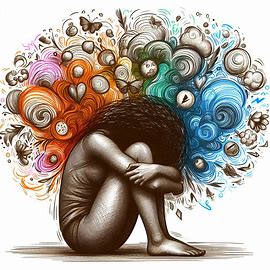
Powerful Language is Key
It doesn’t matter what you believe right now or how you feel. Yes, I said that. Truth always matters, but what you experience isn’t reality itself—it’s reality filtered through your thinking styles. And those thinking styles are driven by language, just as language is driven by your thinking. The key? Change one, and the other will follow. Sneaky? A bit. But in the best possible way.
Before we get to the lists, let me first tell you about the power of priming in the least psychologically fancy way possible.
Priming Yourself-Another Superpower
Priming is a psychological concept that significantly influences how we think, feel, and act, often without our conscious awareness. Essentially, priming involves exposing ourselves to certain experiences or information, which then shapes our responses to what comes next. It’s like preparing your mind to notice and focus on specific things, which can impact your thoughts, emotions, and behaviors for hours afterward. The great thing about priming is that you have the power to decide what you expose yourself to, allowing you to guide your mindset in a positive direction.
A classic study by psychologists John Bargh, Mark Chen, and Lara Burrows demonstrated just how subtle but powerful this effect can be. In the experiment, participants were asked to unscramble sentences containing words related to aging, such as “retired,” “wrinkles,” and “Florida.” Personally I take a little offense to the Florida one since I live here and think it’s pretty swell! Anyway, the researchers didn’t tell the participants that the study was related to old age—on the surface, it was just a word puzzle. However, after completing the task, the participants subconsciously adopted behaviors commonly associated with elderly individual for several hours after. Wow! They walked slower, thought slower, and generally acted in line with the priming, all without being aware of it (Bargh, Chen, & Burrows, 1996).
This is why your language is so important. If you’re constantly telling yourself limiting things like, “I can’t do this,” or “I’m always messing up,” you’re essentially priming yourself to believe those things and act accordingly. It’s not just about how you feel in the moment—your brain will keep looking for evidence to confirm those beliefs and perpetuate them throughout your day. This can lead to a downward spiral of negative thinking and unhelpful behaviors that limit your ability to Thrive.
On the flip side, when you consciously choose to use powerful language, you prime your brain to look for success, confidence, and resilience. By saying things like, “I can handle this,” or “I’m getting stronger every day,” you’re training your mind to focus on possibilities and solutions, leading to more empowered thoughts and actions. This is why we have a specific activity called “Processing your positives” in The Thrive Programme you’ll learn-just 5-10 a day will have your self esteem boosted and stable!
Secret Tip: This is actually technically a strong coping skill to have in your mental health toolbox as well-next time you create an anxious thought start speaking powerful calming statements which challenge that thought and feel the tension fade!
“Just knowing you have a coping skill to use is a coping skill” -Rob Kelly
Think of it like planting seeds: the words you use are either planting weeds (negative thoughts) or flowers (positive, powerful thoughts). Over time, whichever you plant will grow stronger and take over your mental landscape. So why not choose thoughts that lift you up? Here’s a picture of a piece of art I keep in my studio to remind me that my thoughts are my choice! Also it has sunflowers which is our beautiful Thrive logo!

Your Turn To Practice A Bit
Below are several examples of unhelpful language styles—just a few that you’ll learn to identify and change. Once you recognize these patterns, you can challenge and replace them with more powerful alternatives. How you feel in the moment doesn’t matter much because you’re essentially setting yourself up to look for what you believe. So, start practicing shifting some of these statements. Keep at it, no matter how you feel—even better, say them out loud! And don’t let social anxiety hold you back; once you’ve tackled it, talking to yourself in public won’t seem like such a big deal. In fact, talking to yourself is often considered a sign of intelligence. It makes sense—learning to coach yourself is one of the most valuable life skills you can develop.
Alongside your chosen Thrive manual, I will guide you in changing and refining your inner voice to create more positive, calming, and powerful thoughts. In the meantime, see if you can spot any of these unhelpful statements in your own language:
- Limiting Language-these phrases come from a place of powerlessness, learned helplessness or as the psych world knows it-victim mentality. Not only does it proliferate external thinking, but can contribute to depression and other symptoms especially if the person broods and ruminates on them. This is the “stuff” of depression and low self esteem! These statements reflect a pattern of negative self-talk and beliefs that can severely limit one’s self-esteem, confidence, and overall well-being:
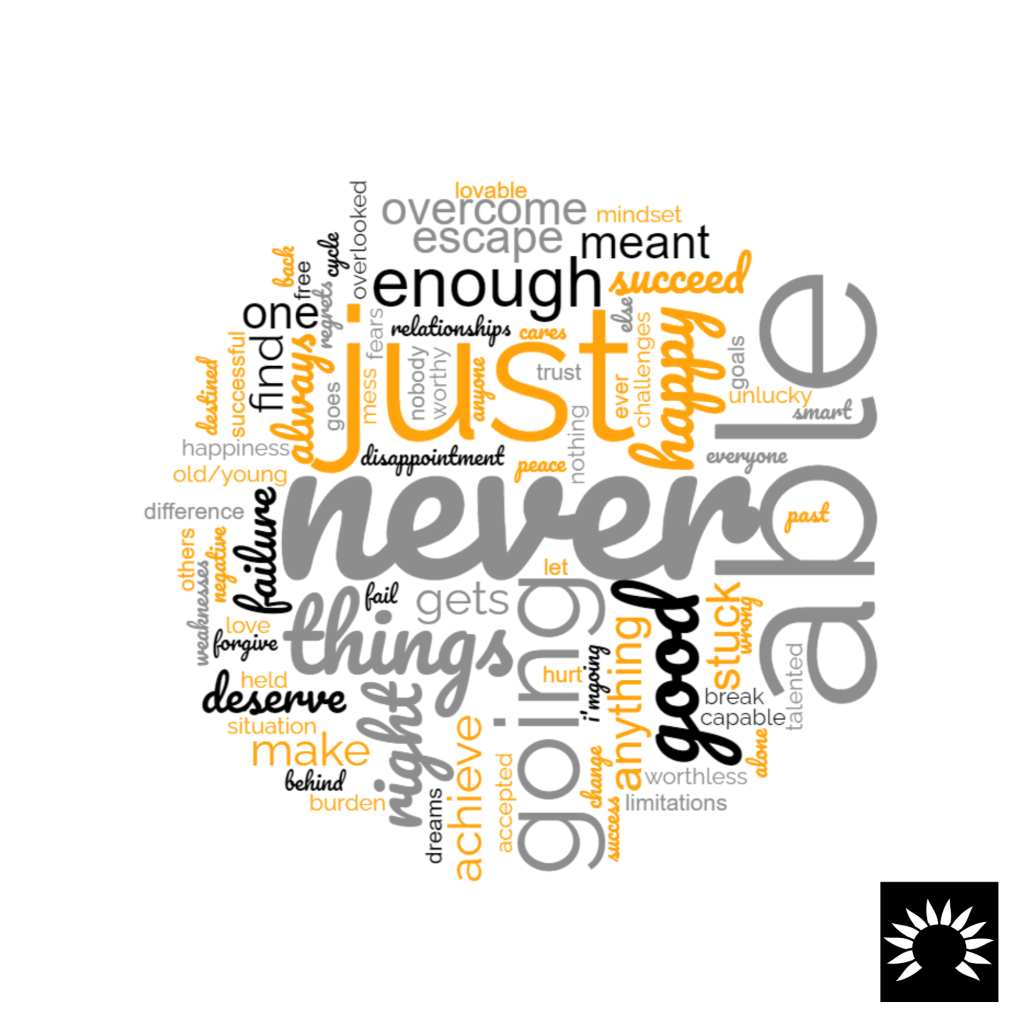
- “I’m not good enough.”
- “I’ll never be successful.”
- “I always mess things up.”
- “Nobody cares about me.”
- “I’ll never achieve my goals.”
- “I’m worthless.”
- “Nothing ever goes right for me.”
- “I’m a failure.”
- “I’ll never be happy.”
- “I’m just not talented enough.”
- “I’m always overlooked.”
- “I can’t do anything right.”
- “I don’t deserve good things.”
- “I’m always unlucky.”
- “I’m too old/young to succeed.”
- “I’ll never find love.”
- “I’m just not smart enough.”
- “I’ll never be as good as others.”
- “I’m always the one who gets hurt.”
- “I’ll never be able to change.”
- “I’m a disappointment.”
- “I’ll always be stuck in this situation.”
- “I don’t deserve to be happy.”
- “I’ll never be good at anything.”
- “I’m always going to be alone.”
- “I’ll never be able to overcome my challenges.”
- “I’m just destined to fail.”
- “I’ll never be accepted for who I am.”
- “I’m always going to be a burden.”
- “I’ll never be able to make a difference.”
- “I’m just not lovable.”
- “I’ll never be able to forgive myself.”
- “I’m always going to be behind everyone else.”
- “I’ll never be able to escape my past.”
- “I’m just not worthy of success.”
- “I’ll never be able to trust anyone.”
- “I’m always the one who gets things wrong.”
- “I’ll never be able to let go of my regrets.”
- “I’m just not capable of happiness.”
- “I’ll never be able to break free from my limitations.”
- “I’m always going to be a failure in relationships.”
- “I’ll never be able to overcome my fears.”
- “I’m just not meant to be happy.”
- “I’ll never be able to achieve my dreams.”
- “I’m always going to be stuck in this cycle.”
- “I’ll never be able to find peace.”
- “I’m just not meant to succeed.”
- “I’ll never be able to make things right.”
- “I’m always going to be held back by my weaknesses.”
- “I’ll never be able to escape this negative mindset.”

Specifically for Emetophobes:
Often those with Emetophobia believe they are the worst case ever and cannot be cured even if others can be. They may believe our testimonials but think their circumstance is different…too hard…too ingrained. This is NOT true! Anyone can learn to Thrive and overcome Emetophobia…I know because I used to think this way also and now I am Thriving!
You have emetophobia because you’re not Thriving you’re not Thriving because you have emetophobia!
You can fill in the word emetophobia for whatever mental health negative symptoms you are currently suffering with, the fact is that it is the same. That is why the meaning behind “Thriving” or “learning to Thrive” is vital to reducing and eliminating limiting symptoms like depression, obsessive thinking, overeating, having a career less than desired, poor body image and more.
Other statements around one’s physical or mental health or circumstances in a catastrophic way like this “but my life is much harder than others because I have xyz” “you just don’t understand what it’s like” or “you don’t have this disability or you wouldn’t say that”…statements like these are also very limiting.

2. Catastrophic Language: When people use catastrophic language, it can affect both their minds and bodies. Our bodies are wired to respond to potential threats by releasing stress hormones like cortisol and adrenaline, which can weaken our immune system. This whole process is kind of like a self-fulfilling prophecy, where always expecting the worst can make us feel even more anxious and distressed.
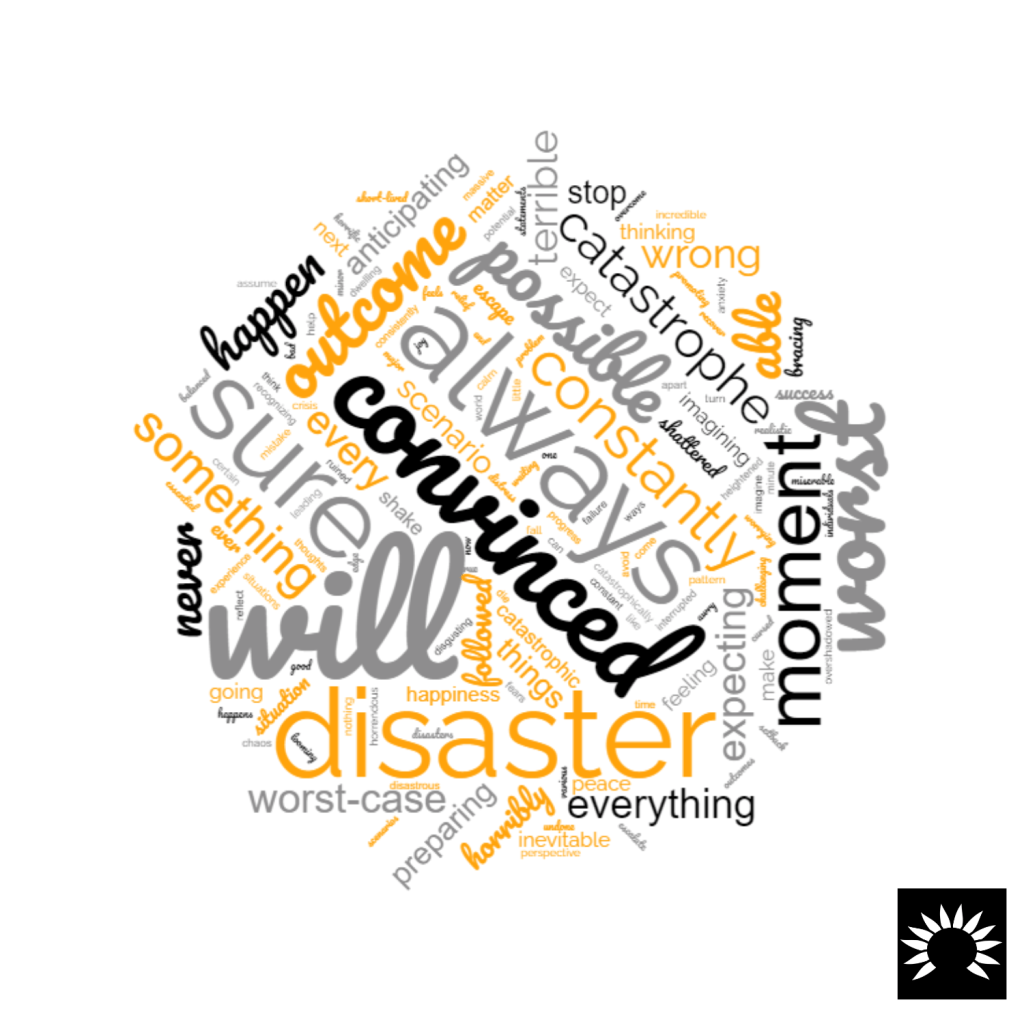
- “If I make one mistake, everything will fall apart.”
- “I always expect the worst to happen.”
- “It’s only a matter of time before something terrible happens.”
- “I can’t shake the feeling that something bad is about to happen.”
- “Every minor setback feels like the end of the world.”
- “I’m constantly worrying about worst-case scenarios.”
- “I’m sure everything will go wrong.”
- “I can’t stop imagining disastrous outcomes.”
- “I’m convinced that everything is going to turn out horribly.”
- “I always assume the worst possible outcome.”
- “I can’t help but think that disaster is inevitable.”
- “I’m sure something terrible is going to happen any minute now.”
- “I’m constantly expecting things to go catastrophically wrong.”
- “I can’t stop thinking about all the ways things could go horribly awry.”
- “I’m convinced that any success I have will be short-lived.”
- “I’m sure that every little problem will escalate into a major crisis.”
- “I always imagine the worst-case scenario.”
- “I’m certain that my fears will come true.”
- “I’m always preparing for the worst possible outcome.”
- “I can’t shake the feeling that something catastrophic is looming.”
- “I’m convinced that any moment of happiness will be followed by disaster.”
- “I’m always on edge, waiting for something terrible to happen.”
- “I can’t stop dwelling on potential disasters.”
- “I’m sure that any progress I make will be undone by disaster.”
- “I’m convinced that I’ll never be able to escape catastrophe.”
- “I’m always bracing myself for the worst.”
- “I’m sure that any moment of peace will be shattered by disaster.”
- “I’m constantly expecting the worst possible outcome in every situation.”
- “I’m convinced that I’m cursed to experience constant disaster.”
- “I’m always anticipating the worst-case scenario.”
- “I’m sure that any moment of relief will be followed by catastrophe.”
- “I’m convinced that I’ll never be able to avoid disaster.”
- “I’m always anticipating the next catastrophe.”
- “I’m sure that any moment of calm will be interrupted by chaos.”
- “I’m convinced that nothing good will ever happen to me.”
- “I’m always expecting everything to go wrong.”
- “I’m sure that any moment of happiness will be ruined by disaster.”
- “I’m constantly preparing for the worst possible outcome.”
- “I’m convinced that I’ll never be able to overcome disaster.”
- “I’m always imagining the worst possible outcome.”
- “I’m sure that any moment of success will be followed by failure.”
- “I’m constantly anticipating the next catastrophe.”
- “I’m convinced that I’ll never be able to escape from disaster.”
- “I’m always bracing myself for the worst-case scenario.”
- “I’m sure that any moment of joy will be overshadowed by disaster.”
- “I’m constantly expecting things to go horribly wrong.”
- “I’m convinced that I’ll never be able to recover from disaster.”
- “I’m always preparing for the worst possible outcome in every situation.”
- “I’m sure that any moment of peace will be shattered by catastrophe.”
- “I’m convinced that disaster is inevitable, no matter what I do.”
Scientists have been looking into how language, thoughts, and our bodies are connected, and it’s pretty fascinating stuff. They’ve found that the words we use can really impact how we feel and even how our bodies react. For example, saying negative things to ourselves can really mess with our mood and stress levels. You can start by asking yourself whether these thoughts are realistic or if they are exaggerated. For example, if you think, “Everything always goes wrong,” counter this with evidence of times when things went well….and yes, say it out loud and repeat a few times to cement it in!
3. The use of self-limiting defeating/negative statements is often associated with black and white and perfectionist thinking styles. These statements frequently include “should or shouldn’t,” which inherently impose limitations.
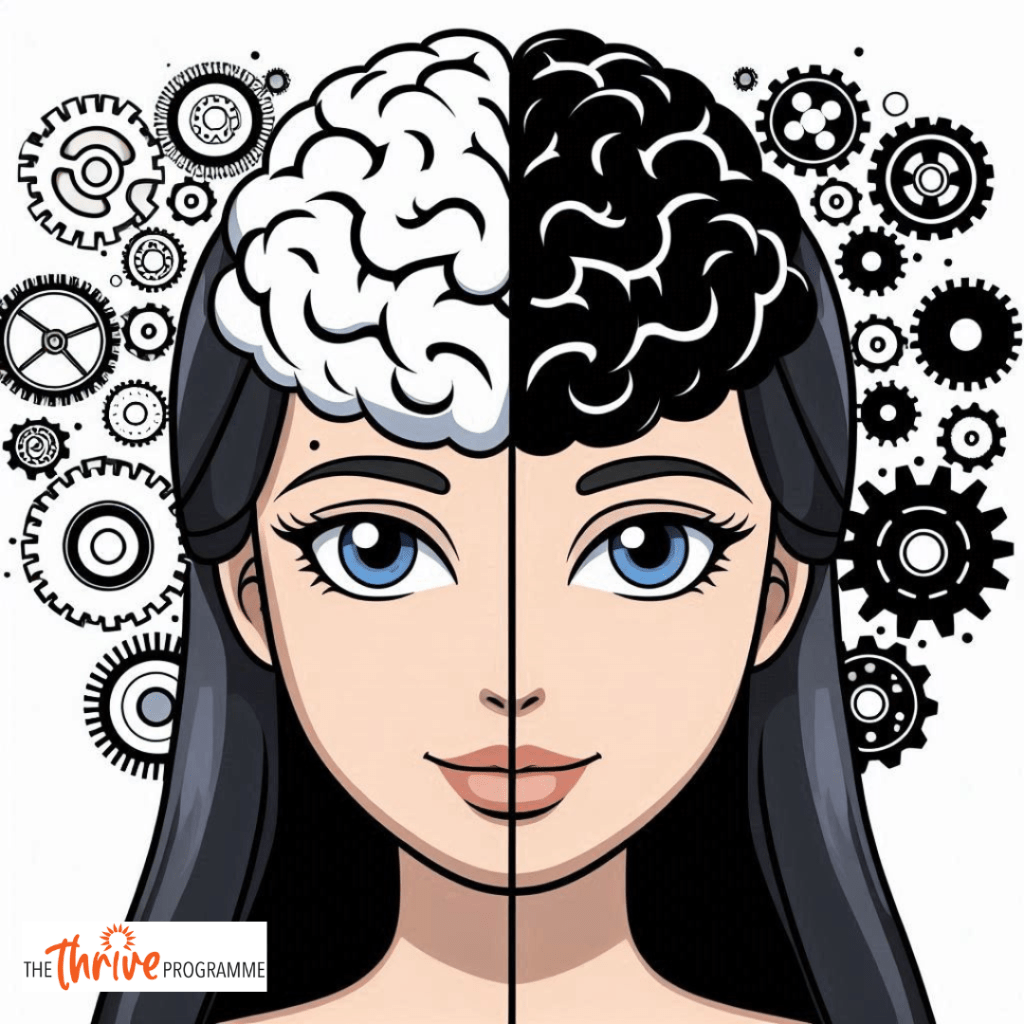
- “I have to be perfect.”
- “I’m either a success or a failure.”
- “If I’m not the best, I’m worthless.”
- “Mistakes are unacceptable.”
- “I’ll never be good enough.”
- “I always have to do everything perfectly.”
- “If I can’t do it perfectly, I won’t do it at all.”
- “There’s only one right way to do things.”
- “I can’t handle failure.”
- “If it’s not perfect, it’s a disaster.”
- “I must achieve all my goals to be happy.”
- “I’ll never reach my potential.”
- “I’m either completely in control or completely out of control.”
- “I can’t tolerate uncertainty.”
- “I have to be flawless in every aspect of my life.”
- “If I make one mistake, I’m a failure.”
- “I can’t relax until everything is perfect.”
- “Others won’t accept me if I’m not perfect.”
- “I can’t forgive myself for making mistakes.”
- “If it’s not perfect, it’s not worth doing.”
- “I must be perfect to be loved.”
- “it’s not enough”
- “I must always be in control of my emotions.”
- “I’m either completely right or completely wrong.”
- “I should have known better.”
- “If I’m not the best, I’m a failure.”
- “If I can’t do it perfectly, I shouldn’t do it at all.”
- “I’m not worthy of praise or recognition.”
- “I must be perfect to be respected.”
- “I can’t tolerate making mistakes.”
- “I shouldn’t show weakness or vulnerability.”
- “I’m not good enough unless I’m the best.”
- “If I’m not perfect, people will judge me.”
- “I shouldn’t feel anxious or stressed.”
- “I must excel in every aspect of my life.”
- “If it’s not perfect, it’s a waste of time.”
- “I must always know the right answer.”
- “I can’t handle criticism.”
- “If I fail, it means I’m not capable.”
- “I must never disappoint anyone.”
- “If I’m not perfect, I’m a fraud.”
- “I shouldn’t make mistakes.”
- “I have to be perfect to be successful.”
- “I must always be in control of the outcome.”
- “I shouldn’t have flaws or weaknesses.”
- “If I’m not perfect, I’m unlovable.”
- “I must always appear confident and composed.”
- “I shouldn’t take risks.”
- “If it’s not perfect, I’ll be embarrassed.”
- “I must always be productive and efficient.”
- “but it so ingrained in me”
- “an old dog can’t learn new tricks”
- “it will take too long”
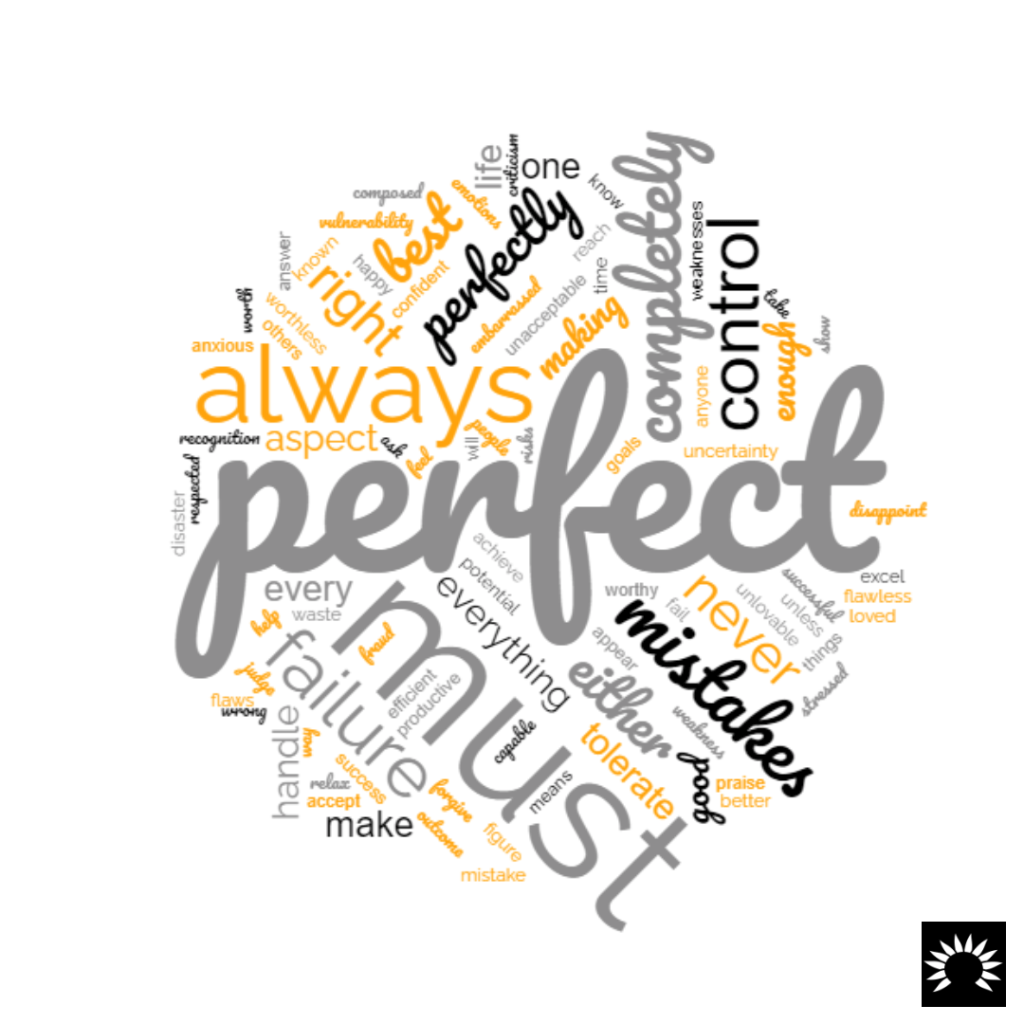
The beauty of Gray: While I was writing this post I realized that all these statements have black and white thinking in common. Using words like “never and always” is something we can begin to be aware of and start amending. Life is not black and white, leave from for the GRAY(which also happens to be a lovely color to decorate with and to wear! )…for a spectrum…for possibilities-it is in the gray that the unknown can flourish, it’s in the gray we can give ourselves some room to be ourselves and that mental health can Thrive.

Reference:
Bargh, J. A., Chen, M., & Burrows, L. (1996). Automaticity of social behavior: Direct effects of trait construct and stereotype activation on action. Journal of Personality and Social Psychology, 71(2), 230–244. https://doi.org/10.1037/0022-3514.71.2.230

 Coach Lauren Singer
Leave a comment