As you’re starting to think about making changes in your life and wondering if it’s worth putting in EFFORT to taking those steps, it’s crucial to recognize just how complex the mental and physical aspects of feeling “Non-Thrivey” can be. You may also wonder “how did I become this way?” Sure, some folks are doing okay overall, but why settle for just okay? Why not aim to make things even better? Why not work towards optimizing where you’re at right now?
“You know, investing in your mental health? It’s like putting your money in the bank and watching it grow. It’s not just about feeling better in your head—it’s about making every part of your life better. And the best part? It’s not some abstract concept; it actually pays off. Take social anxiety, for example. Once you tackle that beast, you’re suddenly more confident at work. You might find yourself speaking up more and even asking for that raise you’ve been eyeing. It’s like a domino effect of positivity.”
-Lauren (me)
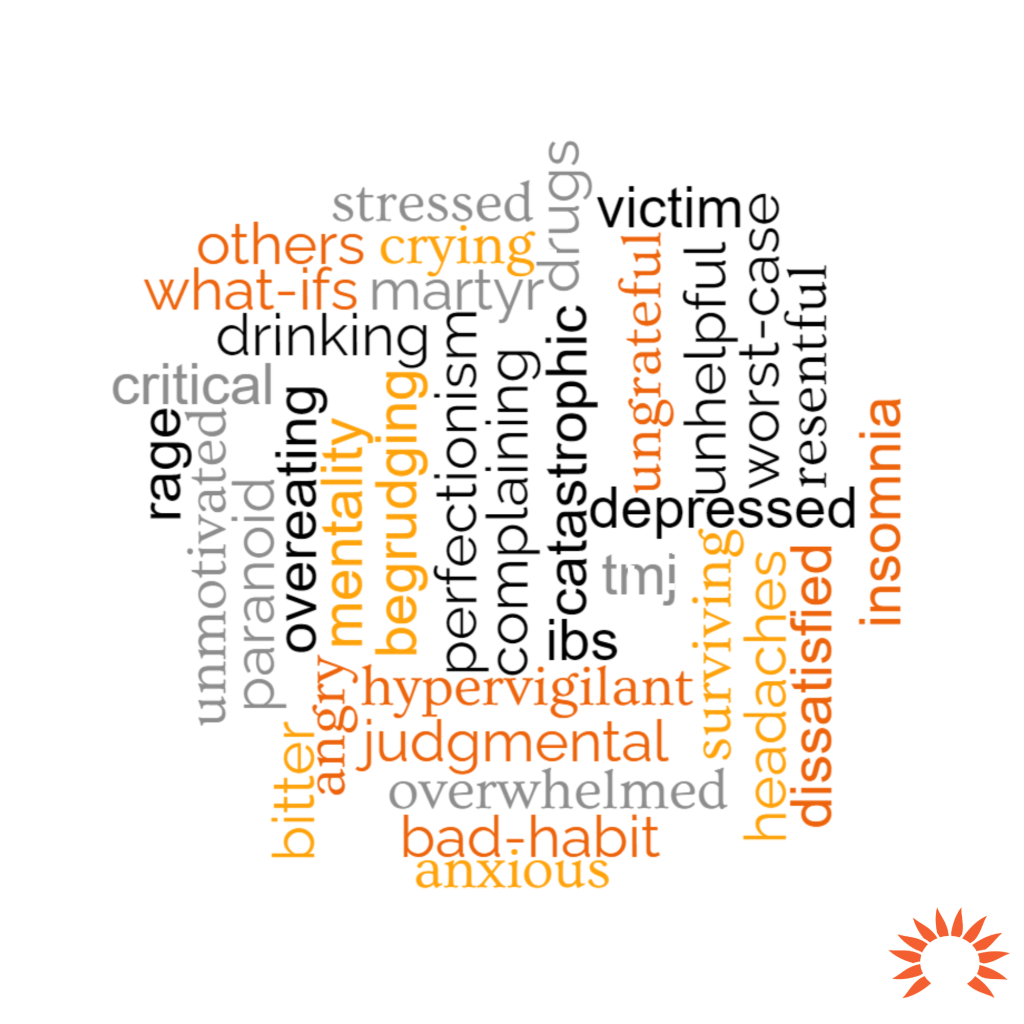
The struggles of a “Non-Thriver” can manifest in various forms, ranging from pervasive feelings of anxiety and depression to moments of intense stress or emotional turmoil. At its core, being in a “non-thrivey” state often entails a sense of disconnection, both from oneself and from the world around us.
When you start out on the path to personal growth and mental well-being, it really begins with taking a deep look at where you’re at right now. So, what does that look like? How do you see and handle life’s ups and downs when you’re struggling with your mental health?
You know, when someone’s going through mental struggles, it can feel to them like being stuck in this loop of negative thoughts that just won’t quit. They’re constantly doubting themselves, overthinking things, and finding it hard to get motivated. If they have a positive or helpful thought their other unhelpful thinking may contribute to shooting it down before they can utilize it. Even simple tasks can feel like climbing a mountain, and chasing after dreams? Forget about it – it feels like trying to catch smoke.
And emotions? They’re all over the place. One minute, it’s like the weight of the world’s crushing down, and the next, there’s a tiny glimmer of hope. But often, from early on, they just never learned how to handle all those feelings properly. It may even manifest in a set of symptoms like borderline personality disorder (as I mentioned I overcame by learning about exposing myself- coping and tolerating uncomfortable feelings).
But it’s not just inside their heads – the way they see the world gets all twisted, too. What others might shrug off as minor bumps in the road? To them, they’re like massive obstacles they can’t possibly overcome. It’s like they’re looking through this cloudy lens that makes everything seem bleak and impossible.
And when it comes to dealing with people? It’s tough. They might feel like they’re on a different wavelength, isolated from everyone else. It’s like being lost in a crowd, even when they’re surrounded by friends. It’s a real struggle, trying to make sense of it all and find a way through. These are all just beliefs, and our beliefs can be challenged and changed!
In response to these challenges, individuals may adopt coping mechanisms that offer temporary relief but fail to address the underlying issues. Some may withdraw from social interactions, seeking solace in solitude, while others may turn to unhealthy habits or substances in an attempt to numb their pain. Despite these efforts, the underlying sense of unease persists, casting a shadow over every aspect of life.
In this state, individuals grapple with a myriad of challenges, both internal and external, that can seem overwhelming. They often attribute significant power to external factors, consequently feeling a lack of agency over their internal experiences. They, effectively give their power away without realizing they are doing so. These challenges frequently stem from unresolved issues such as past traumas, deep-seated fears, or persistent negative thought patterns that contribute to feelings of self-doubt and self-sabotage.
Moreover, individuals in this state often lack effective coping mechanisms to navigate life’s adversities. Rather than confronting their difficulties directly, they may resort to unhealthy coping strategies such as substance abuse or avoidance, further exacerbating their distress.
When confronted with obstacles or setbacks, individuals entrenched in this state tend to respond in ways that perpetuate their struggles. Instead of viewing challenges as opportunities for personal growth, they may feel overwhelmed and defeated, resorting to self-destructive behaviors or maladaptive coping mechanisms. Sometimes this leads to a creation of a “maladaptive coping strategy habit” or what the world likes to call “addiction”. It is as Einstein cleverly pointed out, insanity.
“The definition of insanity is doing the same thing over and over again and expecting a different result.”
~Ok, no one really knows for sure who said this but it is thought he did~
Moreover, being non-thrivey is not merely a passing phase; it’s a prolonged state of being where the weight of one’s struggles feels crushing and unrelenting. It’s like carrying a heavy burden on weary shoulders, each step forward feeling like a Herculean effort.
Furthermore, the non-thrivey state manifests not only in emotional distress but also in physical symptoms such as fatigue, insomnia, and chronic pain. The intricate relationship between the mind and body becomes apparent as the inner turmoil manifests in somatic responses, complicating the path towards healing and well-being. Extensive research conducted during the development of The Thrive Programme unveiled the significance of this connection. That’s why embracing the principles of thriving can potentially enhance the immune system’s functioning.
Picture this: you might wake up each morning to the cacophony of negative self-talk, your mind swirling with doubts about your capabilities and worth. Perhaps you feel ensnared by obsessive tendencies or trapped within the suffocating confines of perfectionism, grappling with the relentless pressure to perpetually excel. These vignettes merely scratch the surface of the multifaceted experience of being non thrivey. You can see in this language that the person perceives that life is happening to them…that their thoughts are not their own…that they can’t help but obsess. All this is NOT true!
In essence, finding oneself in a non-thriving state can be likened to being lost in a labyrinth of challenges, yearning for a path towards tranquility and personal rejuvenation. It’s a journey filled with obstacles and uncertainties, akin to navigating through a dense fog. Or as Rob Kelly explains, it’s like wearing crap tinted spectacles. Yet, amidst this struggle, there exists the potential for profound personal growth and the development of resilience with the Thrive Programme. I urgently want you to experience a life with rose tinted spectacles!
It’s so important to remember that feeling stuck or down isn’t set in stone—there is no such thing as fate or destiny. Actually, this is one major reason why reading horoscopes is unhelpful. But rather a result of how we’re living and thinking right now (this can be changed rather quickly!) Thriving is about taking real steps and changing the way we approach life to grow and feel better. It’s not just a quick fix or a bunch of generic advice; it’s a program backed by research and real know-how, made to give you the tools to take charge of your own happiness.
Hey, thriving isn’t just for a select few. It’s something that’s open to all of us. Just like staying physically fit needs regular work and dedication, keeping your mental health in check also demands commitment. It’s not about sitting back and waiting for life to happen—it’s about actively building up your resilience, getting to know yourself better, and forming positive habits. That way, when life throws its curveballs, you’re ready to tackle them with confidence.
You see, thriving isn’t about blaming everything on what’s happening around us or waiting for others to give us a pat on the back. It’s about keen awareness of how our beliefs, thoughts, attitudes, and behaviors are our own responsibility and we CAN BE INTERNAL…taking control of our thoughts and what we do, and using the strength we’ve got inside to make things better. It’s also about owning up to the choices we’ve made before finding thrive and deciding to make a change and stick with it! It is a lifelong journey that only starts with learning to Thrive!
Thriving isn’t just about getting by—it’s about living life to the fullest and ABSOLUTELY LOVING YOUR LIFE! And guess what? Anyone can do it. With the right tools, support, and attitude, you can start this amazing journey of change, one step at a time. And as we lay the groundwork for transformation, we take the first step towards embracing a life defined not by our struggles, but by our capacity to thrive.





 Coach Lauren Singer
Leave a comment